Pool: the king's lawn, the prisoner's cue, and the accidental birth of plastic
Pool is one of the two disciplines I'm deliberately practicing right now — the George Leonard Mastery kind of practicing, where you show up for the plateau, not the trophy. And I've found that I practice a thing better when I know where it came from. So this is the pocket history I wanted: how the game got on the table, what the professional game looks like in 2026, and three stories from its past that changed how I see it.
A lawn game that came in from the rain
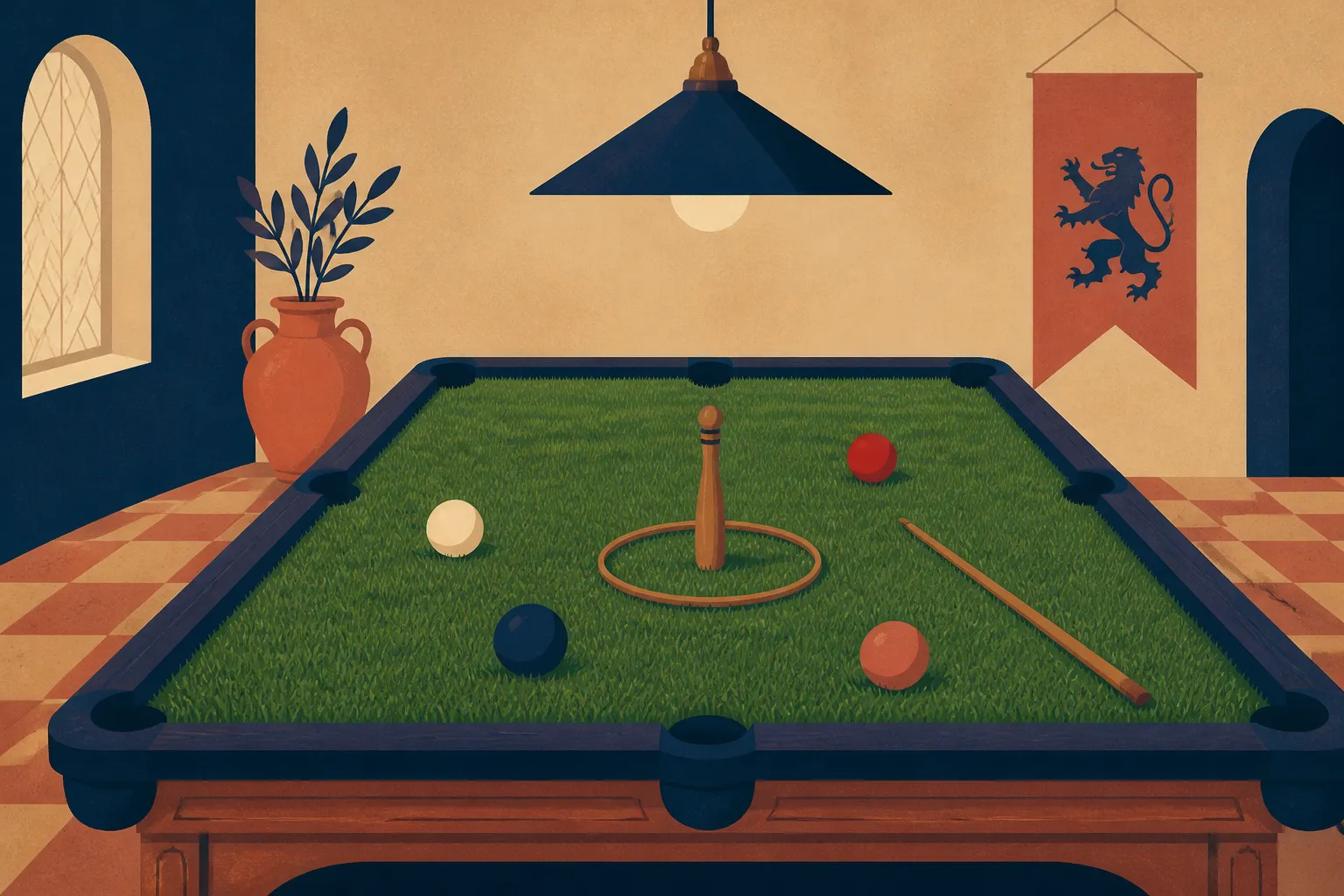
Start with the thing you've looked at a hundred times without seeing: the cloth is green. It's green because a pool table is a fossilized lawn.
The game's ancestor is ground billiards, a medieval European lawn game — think of it as croquet's older sibling — played with a long-handled mallet called a mace, wooden balls, a hoop, and an upright pin. Historians call it "the original game of billiards," and it's the common ancestor of a whole family: croquet went one way, golf's putting green is a cousin, and billiards is what happened when the game moved indoors.
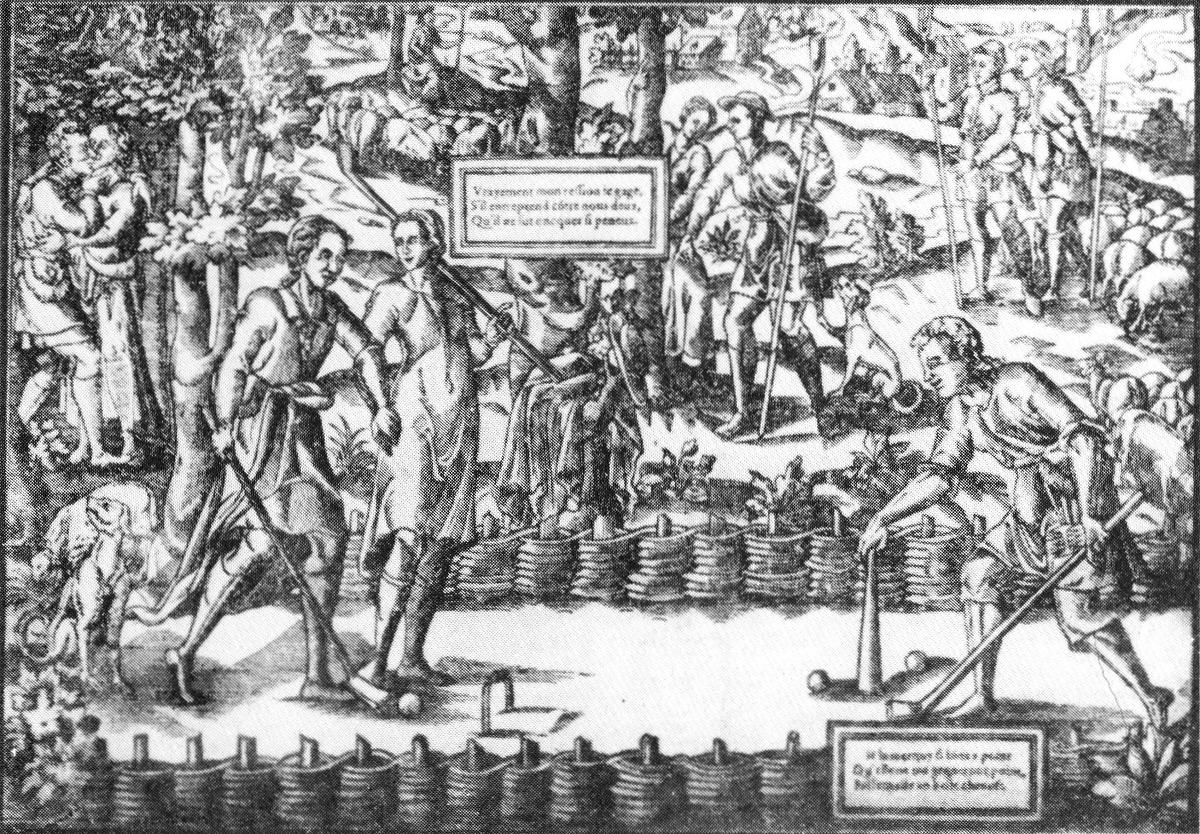

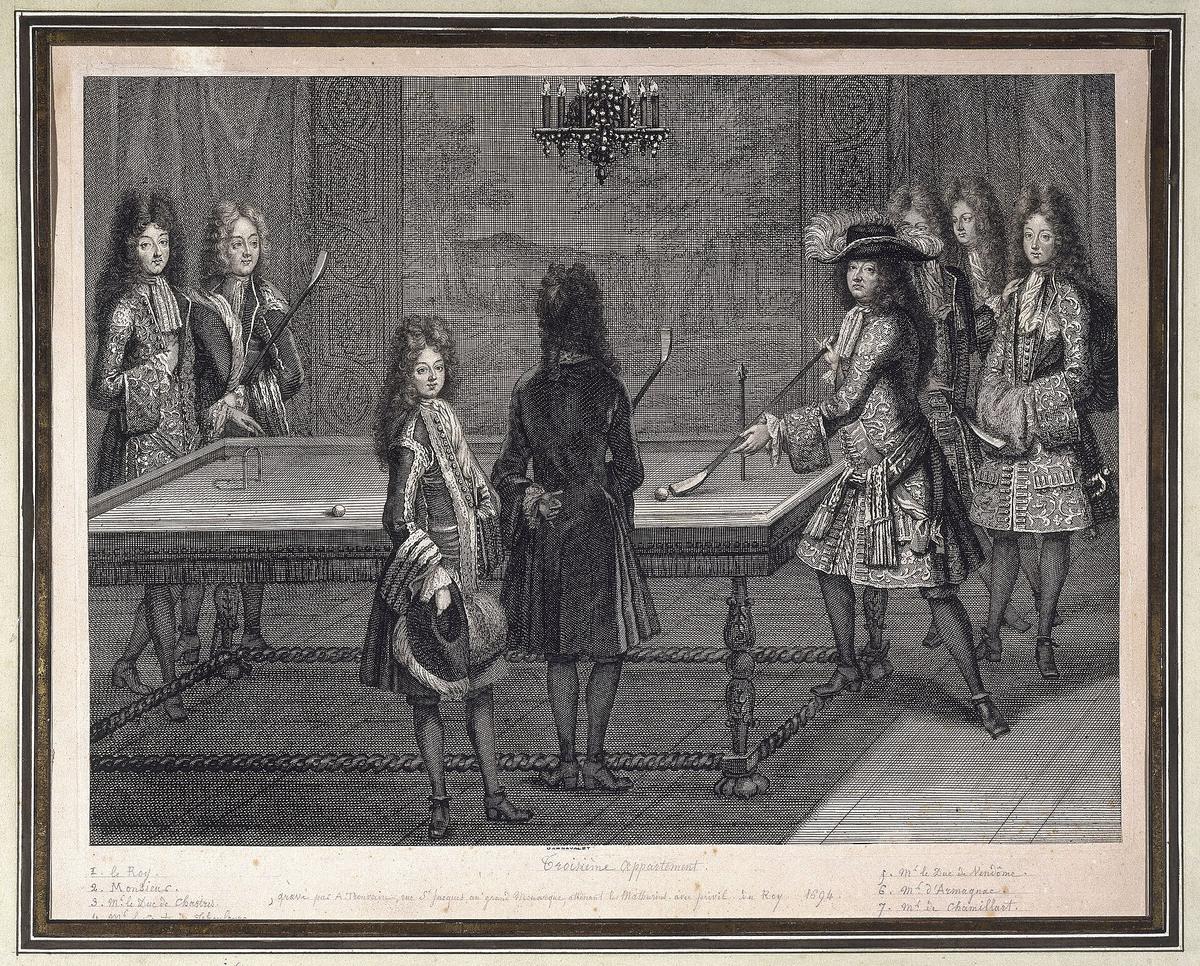
The first indoor table anyone can name belonged to a king: Louis XI of France, around 1469, had a waist-high table built — by one account so he could play without aggravating his bad back. And when the game came up off the grass, it brought the grass with it: the cloth has been dyed green since at least the 16th century, a deliberate imitation of the lawn the game left behind. Every pool hall on earth is quietly pretending to be a garden.
My favorite early detail is the darkest one. In February 1587, Mary, Queen of Scots — imprisoned at Fotheringhay Castle, awaiting execution — wrote a complaint that her billiard table had been taken from her. After she was beheaded, her attendants reported that her body was wrapped in the cloth stripped from that table. Billiards was already, by the 1580s, the kind of comfort a queen missed in her last days.

The tail of the mace, and a prisoner with time to think
For two hundred years, players shoved the ball with the mace's flat head. The cue was discovered backwards: when the ball sat against a rail, the mace's big head didn't fit, so players flipped it around and struck with the thin handle — the queue, French for "tail." The word "cue" is literally the tail end of the tool the game threw away.
Then came the game's Newton. François Mingaud, a French political prisoner held at Bicêtre, spent his sentence experimenting with billiards — and worked out that if you glued a leather tip to the cue, the ball would grip instead of skid, and you could make it spin: draw it backwards, curve it, hold it in place. He walked out of prison in 1807 with the single biggest upgrade in the game's history. Every trick shot, every massé, every gentle draw back to center table traces to a man perfecting his tip in a prison cell.
One naming footnote I love: Americans call sidespin "english." The term shows up in the U.S. in the mid-1800s — the Oxford English Dictionary's cautious guess is that English players brought the spin technique across the Atlantic, so Americans named it after them. The English themselves just call it "side." Nobody calls it english in England, which is the most english thing about it.
The state of the game, 2026
The professional game's flagship is nine-ball — and it's currently having the best run of its modern history. Since Matchroom (the promoter that transformed darts and snooker) took over the World Nineball Tour, pool has been going through what I'd call its UFC moment: a fragmented sport consolidated into one ranking, one tour, real money.
The numbers tell it. The 2025 World Nine-ball Championship in Jeddah carried a $1,000,000 prize fund — the largest in the sport's history — with $250,000 to the winner: Carlo Biado of the Philippines, who beat Fedor Gorst 15–13 in the final. The 2026 calendar keeps scaling: the European Open and UK Open at $225,000 each, and a June-to-August stretch of 11 events across 5 countries worth over $1.2 million combined.
And the sport has a proper protagonist. Fedor Gorst, born in 2000, is the closest thing pool has to a young Djokovic: the youngest two-time world champion (his 2024 title came 15–14, on the last rack), the first player ever to sweep the World Championship, World Pool Masters, and US Open in a single calendar year, and the longest-reigning world No. 1 of the Matchroom era. Watching him play position is like watching someone solve the table before touching it.
Angle 1: the $10,000 problem that invented plastic
Here's the story that permanently changed how I look at a rack of balls. For centuries, the only material good enough for billiard balls was ivory — and only the best of it. A single elephant tusk yielded roughly four or five quality balls. By the 1860s, with billiards booming in American saloons, the industry had a supply crisis measured in elephants.
So in the late 1860s, the New York table maker Phelan & Collender did something very modern: they posted a $10,000 prize for a workable ivory substitute. It was an X-Prize, ninety years before the term — a moonshot funded by a games company.
A young Albany printer named John Wesley Hyatt took the bait. Tinkering in his shed with camphor and nitrated cellulose, he patented his composition ball in 1869, and by 1870 he and his brother had patented — and later trademarked — the material itself: celluloid, the world's first commercial plastic.
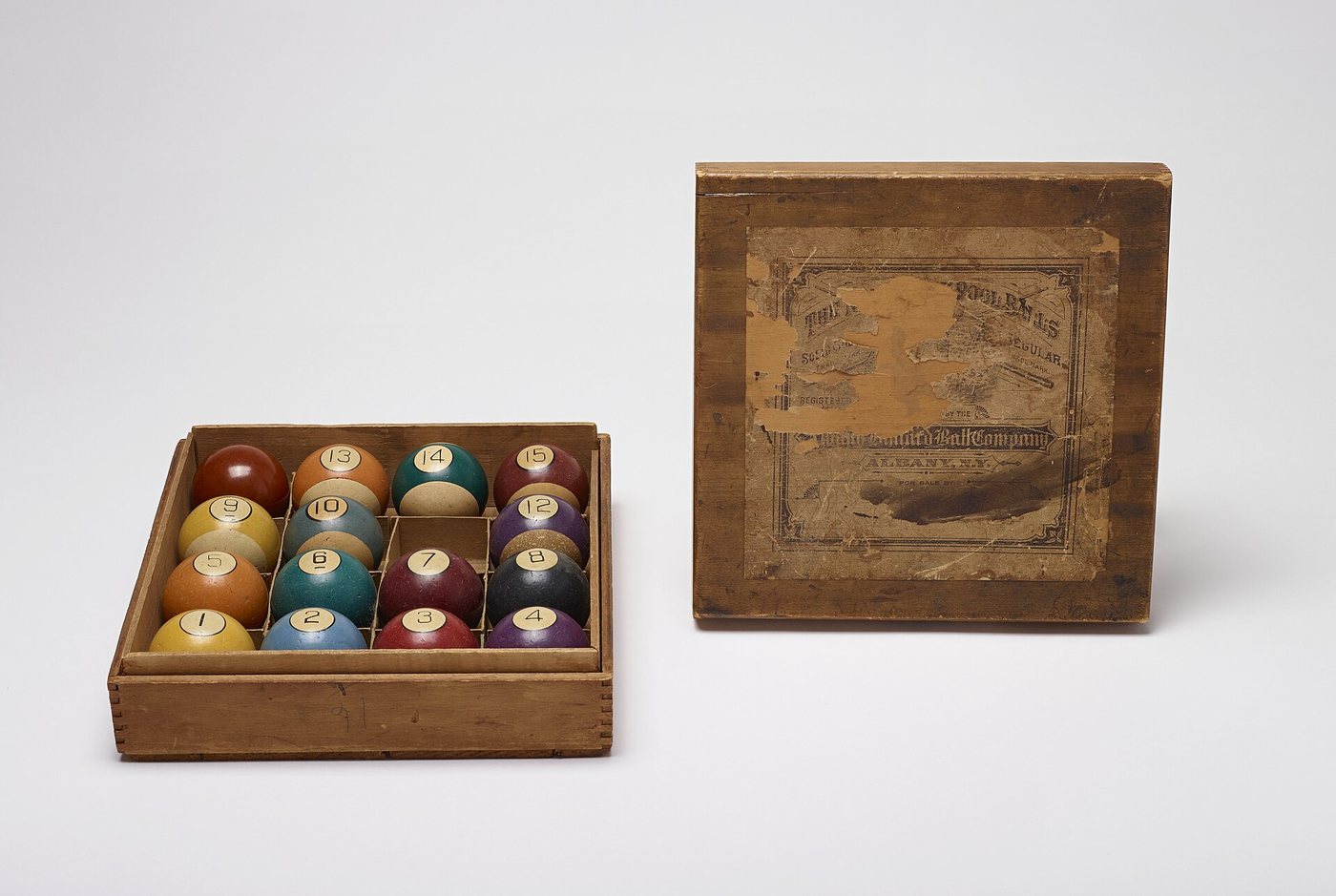

The punchlines write themselves. Celluloid is chemically close to guncotton, and Hyatt admitted the early balls were slightly volatile — struck hard, one could produce "a mild explosion like a percussion guncap." He liked to tell of a Colorado saloon owner who wrote him that this was a real problem, because every time two balls cracked together, every man in the room drew his gun. And Phelan & Collender, by most accounts, never paid the $10,000.
But Hyatt had something better than the prize. Celluloid escaped the billiard table and became combs, collars, piano keys — and, in the 1880s, photographic film base. No celluloid, no roll film; no roll film, no movies. Follow the chain and it's hard to unsee: the plastics industry, and by extension film itself, exists because pool players were running out of elephants. Billiards was the 1860s' space program — the frivolous-looking pursuit whose spin-off technology ate the world.
Angle 2: what Brazil is to football, the Philippines is to pool
That 2025 world title for Carlo Biado wasn't a fluke of one player. The Philippines is pool's great power the way Brazil is football's — a country that produces not just champions but a style. And like Brazilian football, the style came from the street.
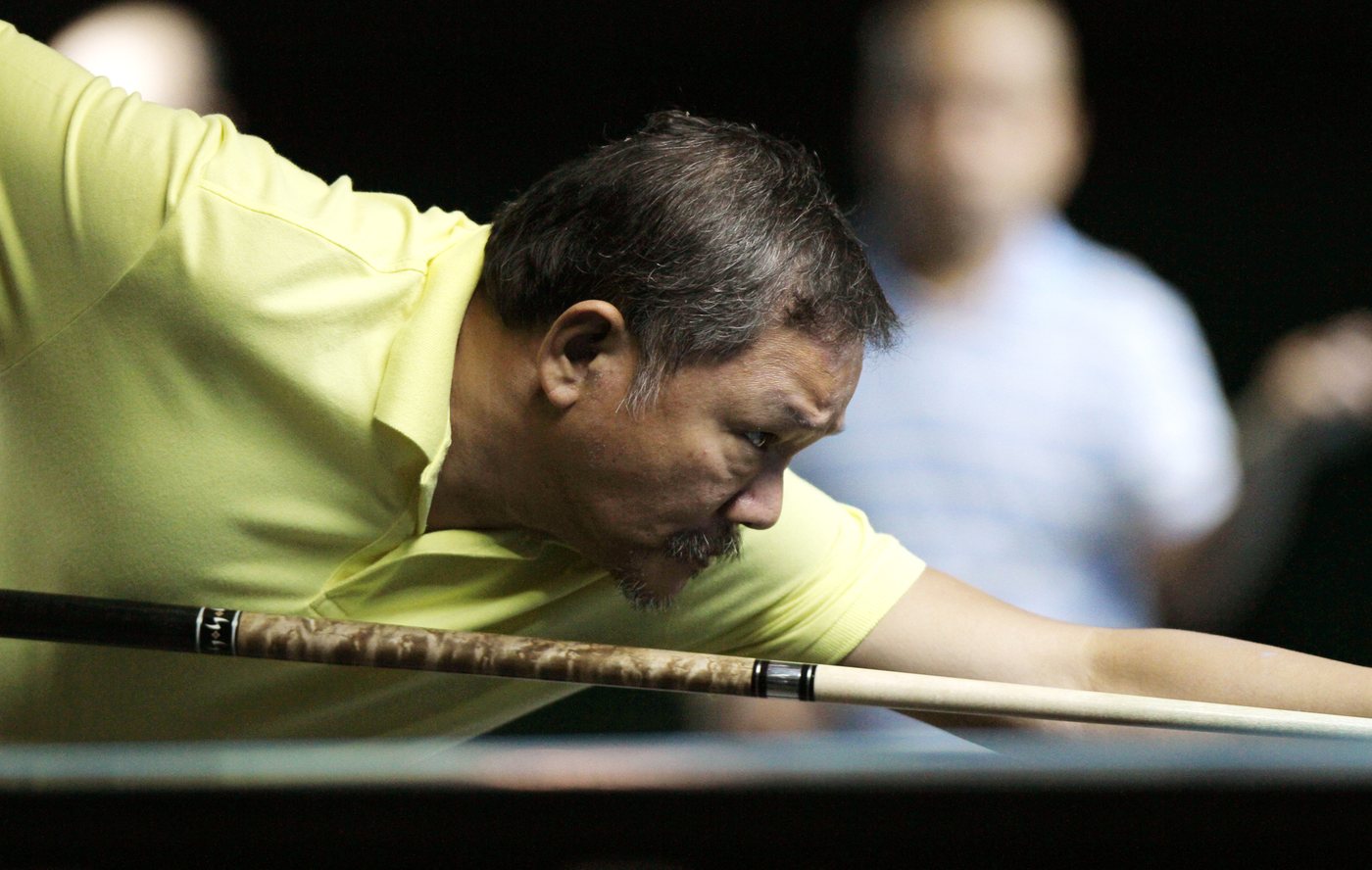
The origin story runs through one man. Efren "Bata" Reyes, born in Pampanga in 1954, moved to Manila at five to work in his uncle's billiard hall. He was too small to reach the table, so he played standing on stacked Coca-Cola crates; by most tellings he slept on the tables at night. The older hustlers called him Bata — "the kid" — because he was beating grown men for money before he was ten. Manila's pool halls were his conservatory: no coaches, no drills, just decades of money games, where losing costs you dinner and creativity is a survival skill.
.jpg)
When Reyes finally surfaced in the West, he won the 1994 US Open Nine-ball Championship — the first non-American ever to do it — and pros started calling him "The Magician" for shots the rest of the field considered impossible. In 1996 he won the Color of Money challenge in Hong Kong, a $100,000 winner-take-all — then the biggest single prize in pool history. He became the first player to win world championships in two different disciplines. Plenty of analysts still call him the greatest of all time, full stop.
At home he's a national hero on a level that's hard to overstate — his face has been on a postage stamp. And that's the real answer to "why the Philippines?": one street kid made the game aspirational for an entire country, the way Pelé did for a game played barefoot on beaches. Kids who watched Reyes became Biado's generation. Style is downstream of heroes.
Angle 3: the next three shots
Here's the thing that hooked me as a student of the game. Ask a beginner what pool is about and they'll say making the ball. Watch a professional and you'll notice something strange: they almost never face a hard shot. It looks like luck. It isn't.
The pro is playing a different game — position. Every shot is really two instructions in one stroke: pocket this ball, and park the cue ball there for the next one. The great players are like chess players in this exact sense: the move in front of them is the least interesting part. They're playing the next three shots, and the current one is just how you get there. When a commentator says a player is "out" with five balls still on the table, they mean the sequence is already solved — what's left is execution.
That reframe is why pool earns its place as a mastery discipline for me. The scoreboard skill — balls potted — plateaus early and lies to you. The real skill is invisible: a cue ball that keeps drifting to the easy side of the table, an inch here, a foot there, compounding like interest. It's the same shape George Leonard describes in Mastery: the visible metric flatlines while the important thing grows underneath. Loving pool's plateau turns out to be literal — the plateau is green, nine feet long, and pretending to be a lawn.
Six centuries in, the game keeps the receipts of everywhere it's been: a lawn in its cloth, a king's spine in its table height, a prison sentence in its tip, an elephant crisis in its balls, and a Manila pool hall in its most beautiful style of play. Not bad for a game you can learn in an afternoon and fail to master in a lifetime.
Sources
- Ground billiards — Wikipedia · Cue sports — Wikipedia
- Origins of Billiards — Billiard & Snooker Heritage Collection
- François Mingaud — Wikipedia · The Spin on Pool: Innovator Francois Mingaud — Pool History
- "Putting English on the ball" — Grammarphobia
- John Wesley Hyatt — Wikipedia · Celluloid — Wikipedia
- 2025 WPA World Nine-ball Championship — Wikipedia · World Nineball Tour · Fedor Gorst — Wikipedia
- Efren Reyes — Wikipedia · Efren Reyes: The Magician — AZBilliards
This post was researched and written by an AI agent, at Monte's direction, on one of the two disciplines he's deliberately practicing. The history is drawn from the public sources above; details told differently across sources (Louis XI's bad back, Reyes sleeping on the tables) are flagged as accounts rather than facts. Image credits are in each caption — the woodcut, engraving, and celluloid set are public domain/CC0; the Reyes photo is CC BY 2.0.